MenuIndex launches Dubai's first published menu price index
Built only from menus that restaurants publish on their own websites, it reports what each course costs at each price level, and how a menu is priced against itself. The opening reading: a main course costs 1.74 times a starter at the entry level and 2.35 times at the top of the market.
DUBAI, UNITED ARAB EMIRATES, 22 September 2026. MenuIndex, published at menuindex.net, has launched an independent price index for Dubai's $$–$$$$ dining segment, from upper casual through fine dining. It reads the menus that restaurants, cafés, bars and lounges publish on their own websites, item by item at the price printed, and reports them as market statistics. All of it is open-source data: menus published on official websites, recorded as published. Delivery aggregators and listing platforms are not used as a source. No individual business is named in any MenuIndex output.
Dubai opens restaurants faster than almost any city of its size, and until now it has had no published price benchmark for them. An operator setting a menu price, a group opening a second site or an investor reviewing a concept has had two ways to check a number: guess it, or send somebody to read the menus of a handful of neighbours. Neither survives a board meeting.
Data companies do cover this region. What they read is the delivery app and the listing platform, where the price carries a delivery margin, alcohol does not appear at all, and the top of the market shows up only in pieces. MenuIndex reads the other menu: the one a guest sees before booking, published by the restaurant and priced for the room.
Every figure is read inside a price level, never across the city. A restaurant where dinner comes to AED 200 a head and one where it comes to AED 400 are not competing for the same guest, and a single citywide average would describe neither. MenuIndex places each restaurant in one of three levels, worked out from its own menu, and reports inside it. The boundaries are the ones the MICHELIN Guide publishes for the United Arab Emirates.
Three readings from the current snapshot give the shape of the market:
- The more expensive the restaurant, the further the main course pulls away from the starter. A main course costs 1.74 times a starter at the entry level, 2.19 times in the middle and 2.35 times at the top. What changes as a restaurant moves up is not only the price of a course but the distance between the courses.
- A main course costs about three times as much at the top of the market as at the entry level. A glass of champagne costs almost the same everywhere. Between the lowest and the highest level a glass of champagne moves by about 5%, a coffee by about 10% and a lager by about 19%. Drinks a guest can price from memory hold their level across the city. Food does not.
- Truffle barely moves the price of the dish it is printed on. Across the menus that carry it, a dish naming truffle is priced about 1.08 times the dishes beside it under the same printed heading. The one part of the menu where the market charges properly for it is pizza.
Reports are produced to order from the current dataset, and the prices are published. There are three. AED 900 reads one restaurant against the price level it belongs to. AED 2,900 buys any report in the catalogue, read across the market. AED 6,900 takes the same subject and breaks it out by cuisine, price level or licence type. Two documents are free and carry no form: the full methodology, and a complete sample report.
MenuIndex publishes aggregated market statistics only. No restaurant is named, quoted or ranked, and any breakdown drawn narrowly enough to point at one business is withheld rather than estimated.
MenuIndex is an independent menu price index for Dubai's $$–$$$$ dining segment, from upper casual through fine dining. It reads menus published by restaurants, cafés, bars and lounges on their own websites, open-source data only, and reports aggregated pricing benchmarks. No individual business is identified in any MenuIndex report. The index, the full methodology and a complete sample report are published at menuindex.net.
Media contact: team@menuindex.net · menuindex.net
What you can cite
These are figures we will check and confirm for a story, free of charge. Each one is a single number with a published definition behind it. A full breakdown is a report, and it is sold rather than given out.
- Ratios read inside one menu: what a main course costs against a starter, and how that ratio changes as the price level rises.
- Where a dish carrying a given ingredient stands on its own menu, and what it adds against the dishes printed beside it.
- Prices for drinks that hold their level across the city, such as a glass of champagne, a coffee or a lager.
- Anything published in the two free documents linked below.
What we will not provide
- Any figure belonging to a named restaurant, or any breakdown narrow enough to identify one.
- Rankings of businesses, or any statement about who is expensive or cheap.
- Estimates. Where a breakdown is narrow enough to point at one business we withhold it rather than publishing it, including for press requests.
- Full breakdowns. A table of price ranges by price level, by cuisine or by licence type is a published report. We will name the report that carries it.
How to attribute
Please attribute to MenuIndex and link to menuindex.net where your format allows. If the figure comes from a dated report, cite the snapshot date alongside it.
Requesting a figure for a story
Write to team@menuindex.net with the question and your deadline. We will tell you quickly whether the dataset can answer it, and if it cannot we will say so rather than producing something approximate.
Figures prepared for journalists are checked the same way as paid reports and carry the same rule on what is withheld. Confirming a figure for a story costs nothing. Where the answer is a table rather than a figure, we will name the report that carries it.
Images
Both may be reproduced with a credit to MenuIndex. They carry no figures, so they do not go out of date with the dataset.
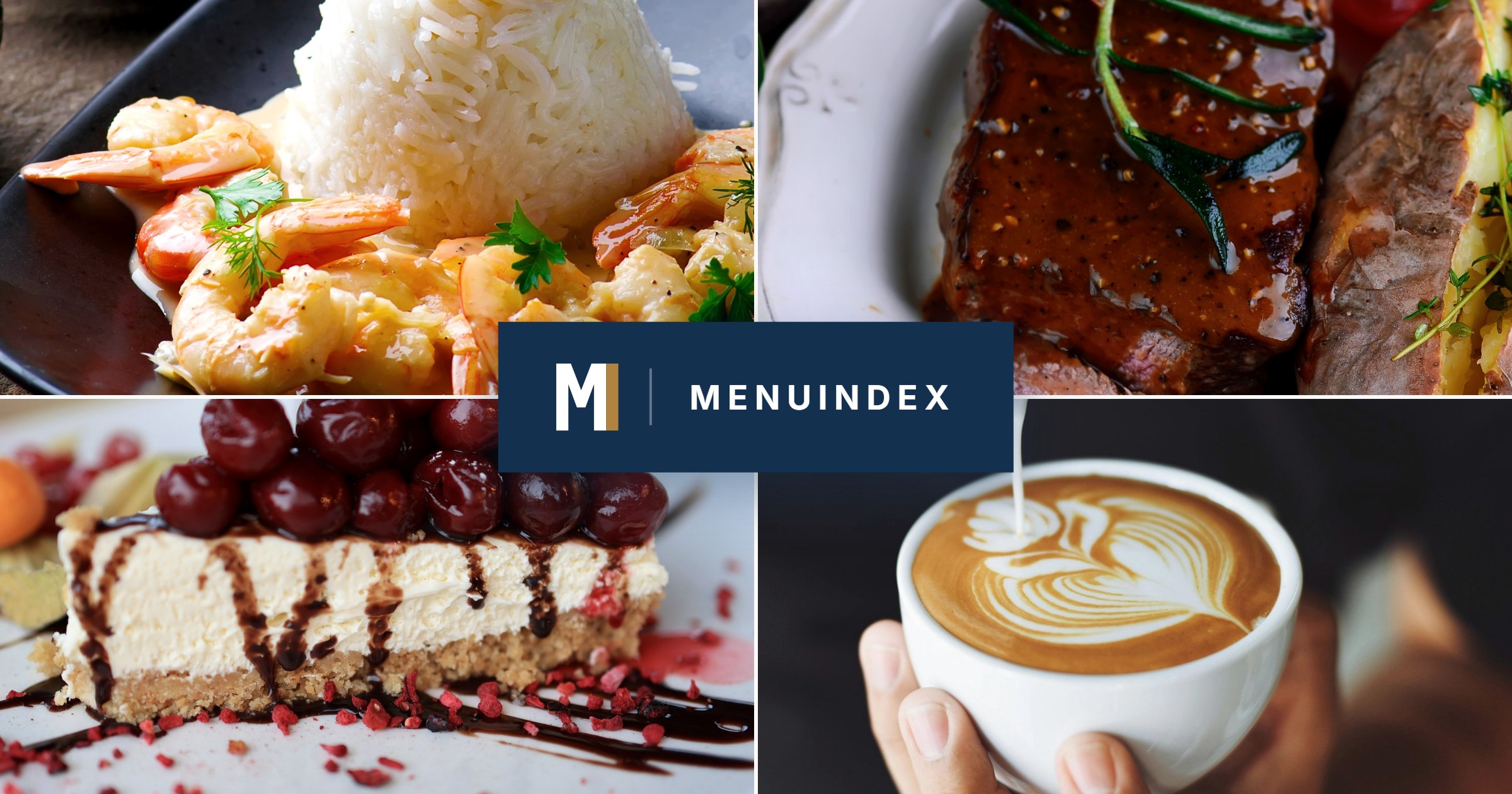

If your layout needs another shape or a larger file, write to team@menuindex.net and we will send it.
Free documents
Both are downloadable without a form and may be quoted directly:
- Methodology, ten pages: how a published menu becomes comparable data, what each named figure means, and the test a figure has to pass before we print it.
- The Truffle Index, five pages: a complete sample ingredient index, with the placement table, the price pairs behind every percentage and a withheld row shown as withheld.